“`html
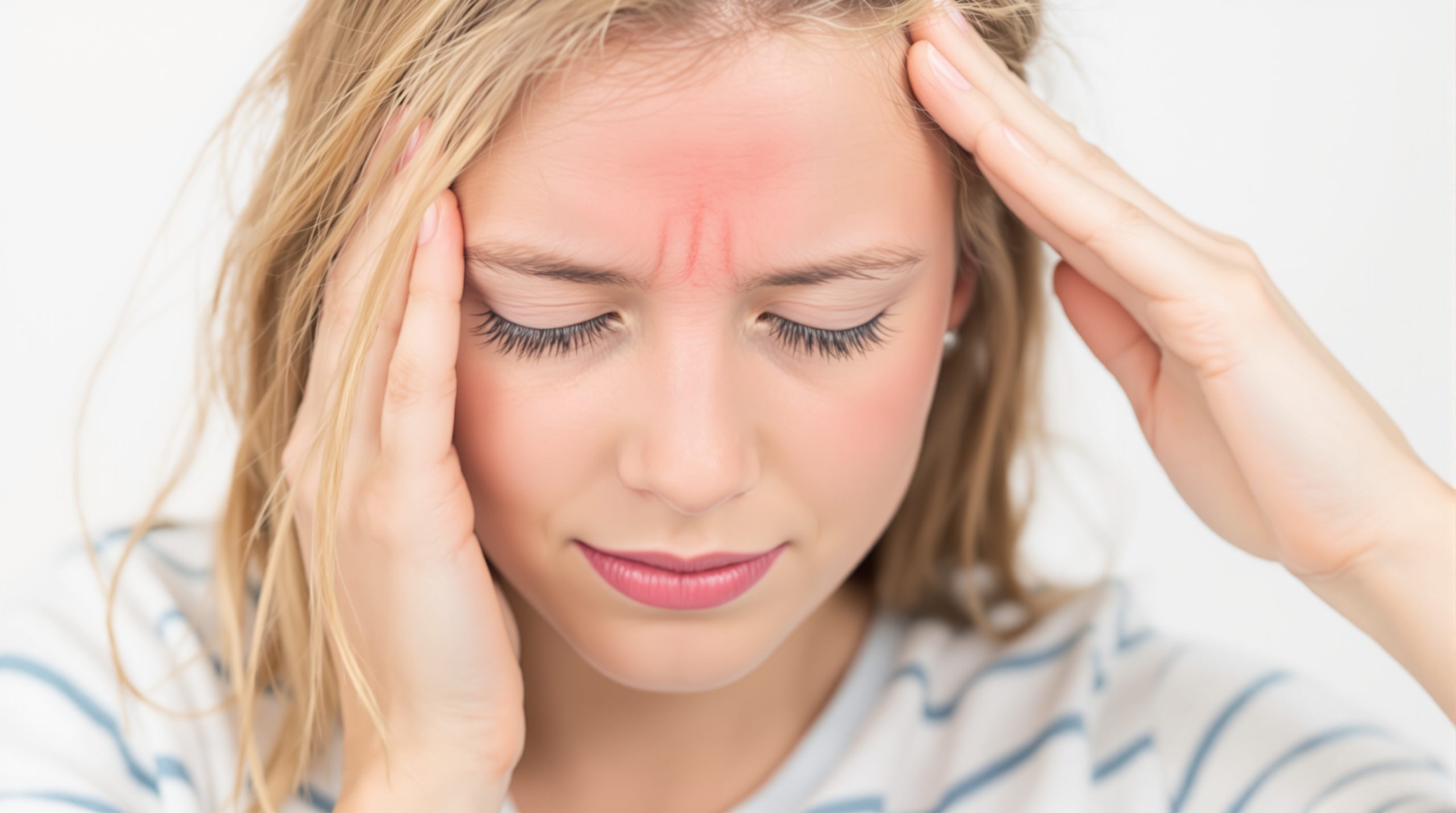
Your teen is clutching their head during math class.
The lights feel too bright.
The noise from the hallway is unbearable.
Sound familiar?
Migraines hit different when you’re a teenager.
You’re dealing with school stress, hormonal changes, and social pressure all at once.
And when a migraine pain solution isn’t within reach, it can derail your entire week in Albany, NY.
I get it.
Your teen isn’t just being dramatic—migraines are real, and they’re brutal.
The thing is, most teenagers don’t know where to start when it comes to finding actual relief.
They pop ibuprofen and hope it works.
Sometimes it does.
Sometimes it doesn’t.
And that’s the frustrating part.
Why Teen Migraines Feel Different
Teen migraines aren’t just smaller versions of adult headaches.
They’re their own beast.
A teenager’s brain is still developing.
Their schedules are packed.
They’re staring at screens more than ever before.
Add in sleep deprivation, caffeine overload, and stress from grades and social life, and you’ve got a perfect storm for tension headaches and debilitating migraine episodes.
Here’s what I’ve noticed:
- Migraines in teens often come with nausea and sensitivity to light.
- They can last anywhere from 4 hours to 72 hours.
- They tend to happen more during school weeks than weekends.
- Girls are more likely to experience migraines than boys after puberty hits.
- Hormonal changes make everything worse.
The real problem?
Most teens in Albany, NY don’t have access to proper guidance on managing headache pain.
They’re stuck between over-the-counter pills that barely work and doctors who say “just rest it off.”
That’s not good enough.
Common Triggers for Migraine Pain in Teenagers
You can’t fix what you don’t understand.
So let’s talk about what actually triggers migraine pain in teens.
The triggers are different for everyone, but I’ve seen these come up constantly:
Stress and Anxiety
School tests, college applications, friend drama—it all adds up.
When a teen is stressed, their muscles tense up.
Blood vessels constrict.
Boom—migraine incoming.
Sleep Problems
Late-night gaming sessions, scrolling TikTok until 2 AM, irregular sleep schedules.
Your teen’s sleep is all over the place.
And sleep deprivation is one of the biggest migraine triggers out there.
Caffeine and Energy Drinks
That energy drink before school?
It might be setting off a migraine headache by afternoon.
Too much caffeine causes blood vessels to constrict, and when it wears off, they expand rapidly.
That expansion is what causes the pain.
Screen Time and Blue Light
Your teen spends 8+ hours staring at screens daily.
Blue light eye strain is real.
It leads to tension headaches and can trigger migraines in sensitive teenagers.
Hormonal Fluctuations
For teenage girls, migraines often spike right before or during their menstrual cycle.
This is called menstrual migraine, and it’s incredibly common.
Skipped Meals and Dehydration
Your teen forgets breakfast, skips lunch, doesn’t drink enough water.
Low blood sugar and dehydration are migraine triggers.
Period.
What Actually Works: Migraine Pain Solutions for Teens in Albany, NY
Now let’s get to the good stuff—what actually works.
I’m talking about real solutions, not just temporary fixes.
Prevention First
The best migraine pain solution is preventing migraines from happening in the first place.
Your teen should:
- Keep a migraine journal to identify triggers.
- Maintain a consistent sleep schedule (even on weekends).
- Limit caffeine intake.
- Stay hydrated—aim for half their body weight in ounces of water daily.
- Eat regular meals with balanced nutrition.
- Take regular breaks from screens (20-20-20 rule: every 20 minutes, look at something 20 feet away for 20 seconds).
- Practice stress-management techniques like meditation or deep breathing.
When a Migraine Hits: Immediate Relief Tactics
Sometimes prevention isn’t enough.
When a migraine starts, timing matters.
The faster your teen acts, the better.
- Take pain relief medication early (don’t wait for it to get worse).
- Get to a dark, quiet room immediately.
- Apply a cold compress to the forehead or warm compress to the neck.
- Stay hydrated—drink water slowly.
- Avoid bright lights and loud noises.
- Try gentle stretching or relaxation techniques.
Here’s the thing though—over-the-counter solutions don’t cut it for everyone.
Some teens have chronic migraines that happen multiple times per month.
That’s where professional help comes in.
When to Get Professional Help for Teen Migraine Pain
Your teen needs to see a professional if:
- Migraines happen more than 4 days per month.
- Pain medication isn’t working anymore.
- Migraines are affecting school performance or social life.
- The pattern or severity of migraines has changed.
- They’re experiencing new symptoms alongside the headache.
This is where Texas Pain Relief comes in.
I’m not just saying this because they’re good at what they do—I’m saying it because they actually understand teenage migraine pain and how to treat it properly.
They offer professional evaluation and treatment options that go way beyond what your typical doctor can do.
Their team specializes in headache and migraine treatment, and they know how to create customized plans for teenagers.
They’re also equipped to explore advanced solutions like chronic pain treatment if your teen is dealing with frequent migraines.
The Importance of Not Ignoring Persistent Migraines
Here’s what worries me most:
Teenagers normalize their pain.
They think migraines are just something they have to“`html
The Real Cost of Ignoring Teen Migraine Pain in Albany, NY
Here’s the thing about teen migraines that nobody talks about.
It’s not just the pain.
It’s what happens when your teenager starts missing school.
It’s the test they bomb because they were in bed with a migraine the night before.
It’s the social life that tanks because they can’t hang out with friends on weekends.
It’s the slow erosion of confidence that comes from feeling out of control in your own body.
Most parents think if they ignore it, it’ll go away.
But migraines don’t work that way.
Without proper migraine pain solutions for teens, the problem gets worse.
Not better.
I’ve seen teenagers develop anxiety around getting migraines.
They start to withdraw.
They skip social events because they’re afraid a migraine will hit.
They stop trying in school because they know they’ll have to miss class anyway.
That’s the part that breaks my heart.
It’s not just a headache—it becomes a barrier to living their life.
How Migraines Impact School Performance and Teen Life
Let’s be real for a second.
Your teen’s grades matter.
Their social connections matter.
Their mental health matters.
And migraines mess with all of it.
When a migraine hits during the school day, your teen can’t concentrate.
They can’t take notes.
They can’t participate in class discussions.
Some schools will mark them absent even if they’re technically there but suffering in the nurse’s office.
Others won’t give test accommodations because “it’s just a headache.”
That’s ignorance talking.
I’ve worked with teens who missed so much school because of untreated migraines that they fell behind by an entire semester.
One girl I knew kept getting migraines every Tuesday and Thursday.
Turns out it was her stress response to two particularly hard classes.
Once she got real migraine pain solutions for teens, she could actually address the root cause instead of just white-knuckling through it.
Sports performance drops too.
Your athlete can’t train when they’re battling migraines.
Coordination suffers.
They get benched.
And then they get frustrated because nobody understands why they suddenly can’t perform.
The Mental Health Connection: Why Teen Migraines Cause Anxiety and Depression
Here’s something most people miss.
Chronic migraine pain doesn’t just affect the head—it affects the mind.
Teenagers with recurring migraines are at higher risk for anxiety and depression.
It’s not because they’re weak.
It’s because chronic pain literally changes brain chemistry.
When your teen experiences pain over and over, they start to anticipate it.
That anticipation creates anxiety.
The anxiety makes the migraines worse.
It’s a cycle.
And without proper migraine pain solutions for teens in Albany, NY, that cycle just keeps spinning.
I’ve seen teenagers develop avoidance behaviors.
They won’t go to school functions.
They won’t sleep over at friends’ houses.
They won’t try new things because “what if I get a migraine?”
Their world gets smaller and smaller.
That’s not living.
That’s just existing.
Building a Teen Migraine Management Plan That Actually Works
So here’s what needs to happen.
Your teen needs a real plan.
Not a band-aid.
Not just popping pills and hoping.
A legit strategy for managing migraine pain.
Step 1: Track Everything
Get your teen a notebook—digital or paper, doesn’t matter.
Every single day, they log:
What they ate.
How much water they drank.
How much sleep they got.
Their stress level (1-10).
Any migraines that happened and how long they lasted.
After two weeks, patterns show up.
After a month, you’ll see exactly what’s triggering the migraines.
This isn’t busywork.
This is detective work.
And it’s the foundation of actual migraine pain solutions for teens.
Step 2: Create a Trigger Avoidance Strategy
Once you know the triggers, you can avoid them.
If energy drinks are the problem, they’re gone.
If late nights are the problem, bedtime gets earlier.
If certain foods spike migraines, those foods are out.
This requires buy-in from your teen.
You can’t force them to drink water or go to bed early.
But you can explain that avoiding triggers means avoiding pain.
That’s a trade-off most teens will take.
Step 3: Set Up an Emergency Protocol
When a migraine hits, your teen needs to know exactly what to do.
Get to a quiet place—they should tell their teacher right away.
Take medication if they have it.
Close their eyes.
Call you if it’s bad.
No improvising in the moment.
Just follow the plan.
Step 4: Talk to the School
Your teen might qualify for a 504 plan or IEP accommodation related to their migraines.
This gives them the right to:
Leave class without penalty if a migraine hits.
Take tests in a quiet room with low lighting.
Make up work they miss due to migraines.
Have a safe space to rest if needed.
Schools have to provide this stuff.
Most just won’t unless you ask.
When Professional Help Becomes Essential for Teen Migraine Pain Solutions
Home strategies work for some teens.
For others, they’re not enough.
If your teen is getting migraines more than twice a month, or if home management isn’t cutting it, they need real professional help.
This is where it gets serious.
A specialist can run tests to rule out other issues.
They can recommend preventative medications that actually stop migraines from happening.
They can explore options like Botox injections for chronic migraines.
They can refer to therapists who specialize in pain management.
At Texas Pain Relief’s headache and migraine treatment center, they work specifically with teenagers who are struggling.
Their doctors get it.
They’re not going to dismiss your teen’s pain or suggest something useless.
They’ll“`html
Medical Treatment Options for Teen Migraine Pain in Albany, NY
Here’s where most parents get lost.
They think migraine pain solutions for teens are limited to ibuprofen and rest.
That’s it.
That’s what they think exists.
But there’s actually a whole toolkit of medical options your teen can access.
The trick is knowing which one fits their situation.
Preventative Medications That Stop Migraines Before They Start
Let me be straight with you.
If your teen gets migraines more than four times a month, preventative medication isn’t optional.
It’s necessary.
Here’s why preventative drugs work different from pain relief meds.
Pain relief tackles the migraine after it’s already happening.
Preventative meds stop it from happening in the first place.
That’s the game-changer.
Beta-blockers
These are typically used for high blood pressure, but they’re solid for migraine prevention in teens.
They work by reducing the intensity of blood vessel contractions.
Your teen takes them daily, not just when a migraine hits.
Common options include propranolol and metoprolol.
Side effects are usually mild—some teens report feeling a bit tired at first, but most adjust quickly.
Tricyclic Antidepressants
Don’t let the name throw you off.
These aren’t just for depression.
Amitriptyline is prescribed specifically for migraine prevention.
It changes how the brain processes pain signals.
The dosage for migraines is way lower than what’s used for depression, and it’s been around for decades.
Works well for teenagers.
Anticonvulsants
Topiramate (Topamax) is an anticonvulsant that actually prevents migraines.
I know—weird name, solid results.
It’s particularly helpful for teens who get frequent migraines.
Some teens report clearer thinking after being on it, though others say it takes a bit to adjust.
CGRP Antagonists
This is newer technology, and it’s genuinely impressive.
CGRP is a protein that causes migraines.
These drugs literally block it.
Erenumab (Aimovig) is specifically approved for teenagers.
It’s a monthly injection, which some teens prefer over daily pills.
Game-changer for chronic migraines.
The real issue?
Finding a doctor who actually understands these options for teenagers.
Most general practitioners won’t explore preventative medication because they don’t think it’s necessary.
That’s a mistake.
At Texas Pain Relief’s headache and migraine treatment clinic, they specialise in these medical approaches for teens.
They’ll run tests, understand your teen’s specific migraine pattern, and recommend exactly what works.
Acute Treatment: What to Do When a Migraine Hits Right Now
Prevention is ideal, but let’s be real.
Sometimes migraines still happen.
When they do, you need fast relief.
Triptans: The Heavy Hitters
Triptans are the gold standard for treating active migraines.
They work by constricting blood vessels and blocking pain pathways in the brain.
Sumatriptan is the most common one prescribed to teenagers.
It comes as a pill, nasal spray, or injection.
Many teens get relief within 30 to 60 minutes.
The key is taking it early—the moment a migraine starts, not when it’s already devastating.
Waiting makes the drug less effective.
NSAIDs Plus Triptans
Sometimes combining a non-steroidal anti-inflammatory drug (like ibuprofen or naproxen) with a triptan works better than either alone.
Your teen’s doctor can recommend the right combo.
Never just double up without professional guidance.
Anti-nausea Medications
Since migraines often come with brutal nausea, treating that separately helps.
Medications like metoclopramide or ondansetron tackle the nausea, letting your teen actually keep food and water down.
It’s not glamorous, but it’s effective.
I’ve seen teens go from completely disabled by nausea to functional again just because someone prescribed an anti-nausea med.
Advanced Migraine Pain Solutions for Teens in Albany, NY
For the real stubborn cases, there are more advanced options.
Botox Injections
Before you panic—yes, Botox.
It’s FDA-approved for chronic migraine treatment.
It’s not about vanity here.
The injections relax the muscles that trigger migraine pain.
Your teen gets shots around the head and neck every 12 weeks.
It takes about two weeks to kick in, and results build over time.
Not every teen needs this, but for chronic cases, it’s legit.
Nerve Blocks
This involves injecting medication directly around the nerves responsible for migraine pain.
It’s minimally invasive and can provide relief lasting weeks or months.
Perfect for teens with episodic migraines that happen in clusters.
Stem Cell Therapy
This is cutting-edge stuff, and Texas Pain Relief offers stem cell therapy options for pain conditions.
While research is ongoing, some patients see real improvements in migraine frequency and intensity.
Worth exploring if your teen hasn’t responded to standard treatments.
The Role of Mental Health Support in Migraine Management
Here’s something nobody talks about enough.
Migraine pain and mental health are intertwined.
Your teen’s anxiety doesn’t cause the migraine—but it sure can trigger one.
And a recurring migraine absolutely triggers anxiety.
That cycle needs breaking.
Cognitive-behavioural therapy (CBT) for pain management is genuinely effective.
Your teen learns techniques to reframe how they experience pain.
They develop coping strategies that actually work.
Biofeedback is another solid option—your teen learns to control physical responses to stress.
When stress levels drop, migraine frequency often drops with it.
A therapist who gets chronic pain in teenagers is gold.
Don’t skip this part.
Lifestyle Tweaks That Multiply the Effect of Medical Treatment
Medication works better when you’re also handling the basics.
That